

Social Systems
Building the in-game engagement and free online service SDK to become a lowkey massive social network.
My role: Group Director, UXUI & Brand Design—I designed the critical path for cross-platform social
If you build it, they will come.
Gaming is inherently social, whether you’re playing with someone or talking with someone about what you’re playing.
As with any cross-platform multiplayer game, Fortnite has always needed the basics of skill-based matchmaking, friending other players, presence (what the player is doing and on what platform), text chat, and voice chat with controls. But Epic has broader ambitions to provide these tools in their EOS SDK to game developers to build a vast and connected decentralized ecosystem, all manageable by an Epic app for those so inclined.
Time is a flat circle.
When I first joined Epic I was attached to all social projects, given my experience doing the same at EA. On Fortnite, the initial goals were straight-forward: clean up the UI and work with product to develop programs that would encourage social graph density.
The challenges of the original Fortnite menu overlay—which opened two panels, one for social and one for settings & legal—were as follows:
It took up far too much of the screen real estate, covering valuable UI and messaging to show content unnecessary to gameplay tasks
Accidental traversal from panel to panel was common in UXR tests which further inhibited usage outside of the home screen
The control mapping was designed for MKB and not optimized for a controller input
Low contrast made it difficult to scan; generally unattractive
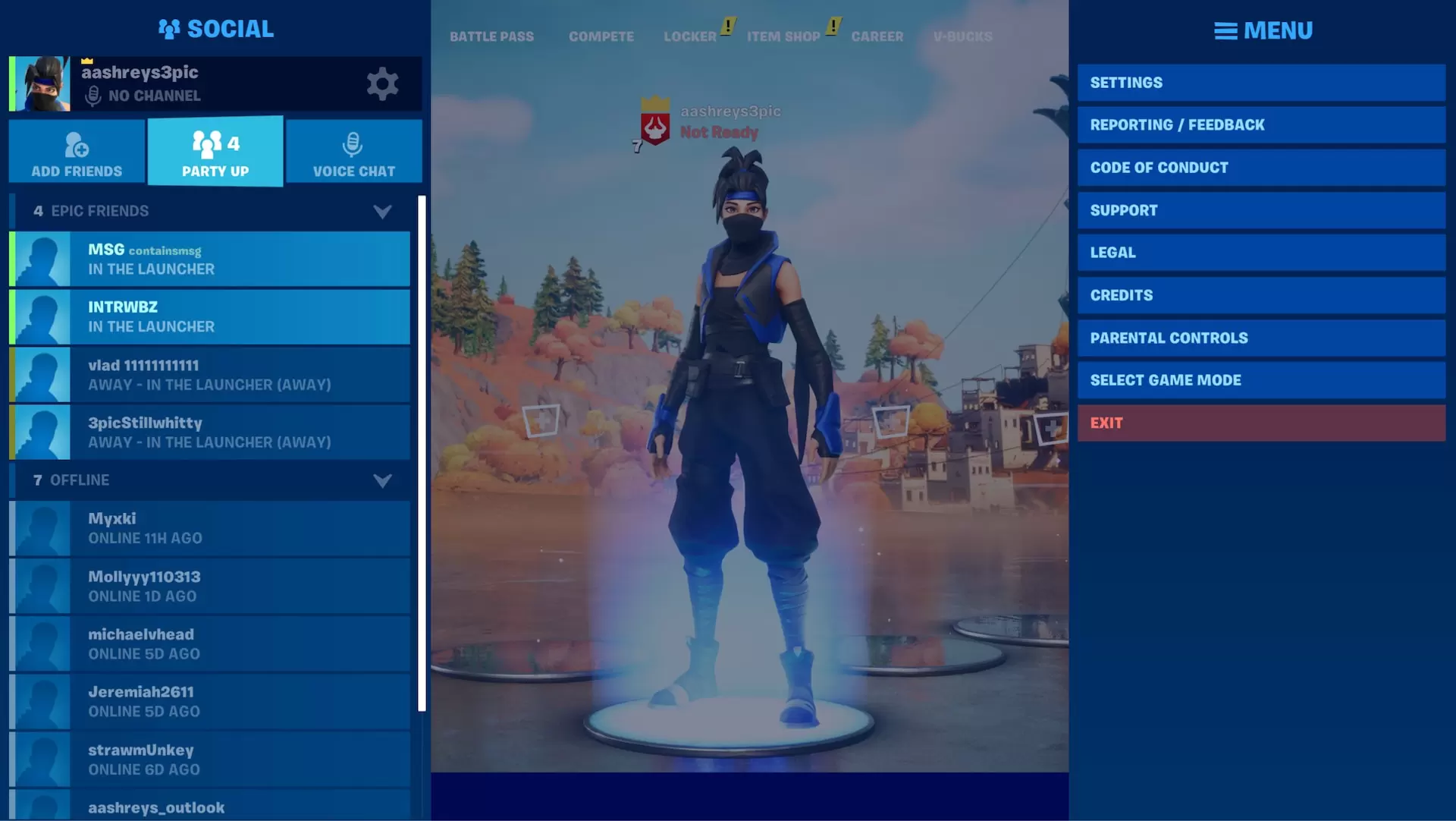
Turned this
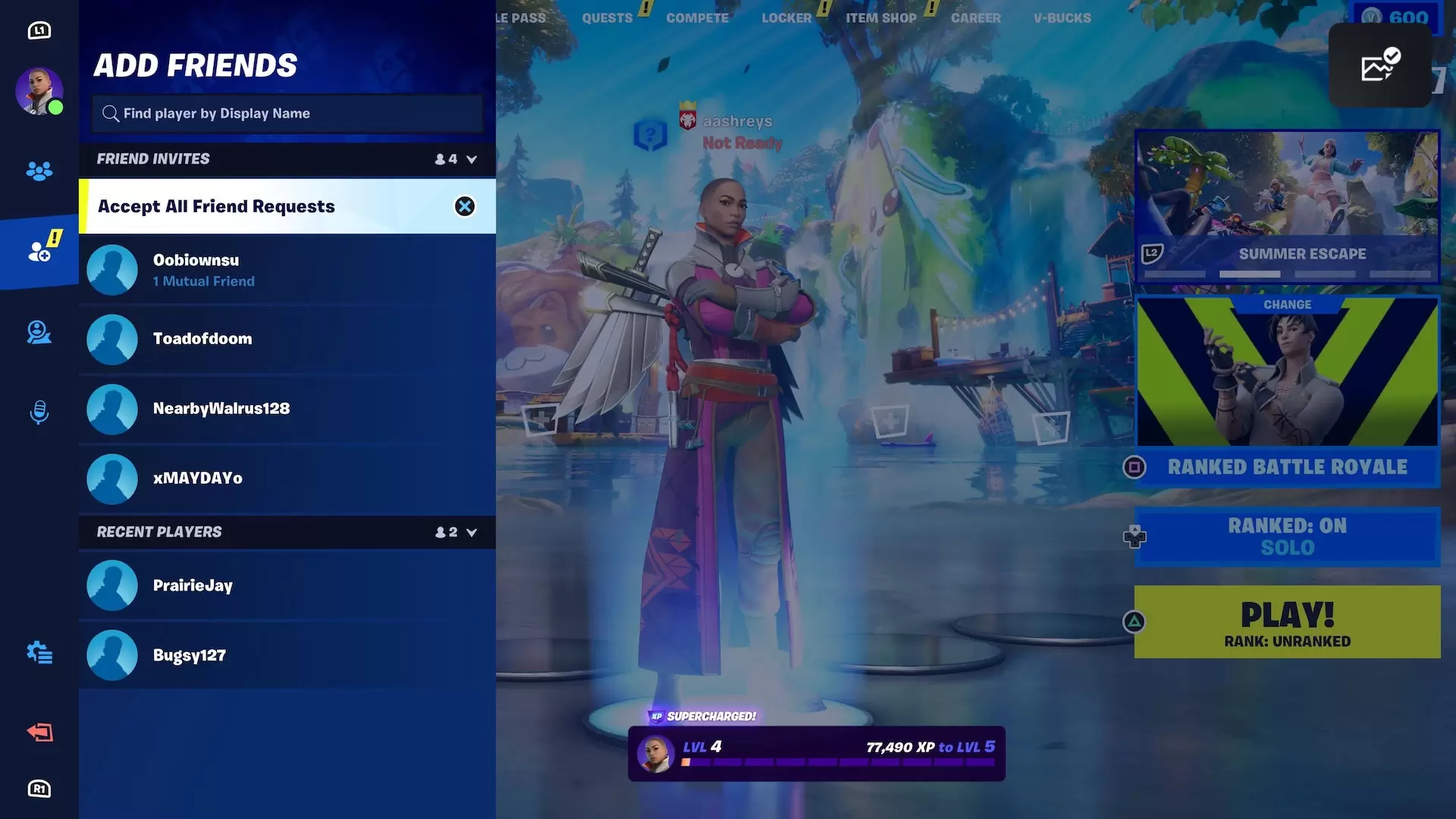
Into this
The UI changes fit with a larger-scoped cleanup, and with a tidier, more intuitive, and input-optimized UX, this was an easy win for players.
The greater challenge was to create value for players in this surface outside of perfunctory tasks of forming a squad and using audio controls.
Players that play with friends consistently engage more and report much better experiences.
And further: lapsed players that return to play with friends on average do so with significantly higher 7 & 30 day retention scores.
With this metric driving success criteria, we built out a program to reward players with unique cosmetics if they sent a lapsed player (or a new player) an open game invite and then played a game together. ‘Reboot Rally’ brought back millions of players over the years, and we say that these returning players also made an average of 3 new social connections. This was coincidentally also our most successful earned media campaign ever.
Simultaneously, we launched a Social Tags, a self-selected categorization system to find other players with similar play-styles and common goals. While most players engaged with the tags, the vast majority of connections made did not result in more than one session. In retrospect, we missed an opportunity to explore tying the tags into matchmaking criteria and tailored XP quests.
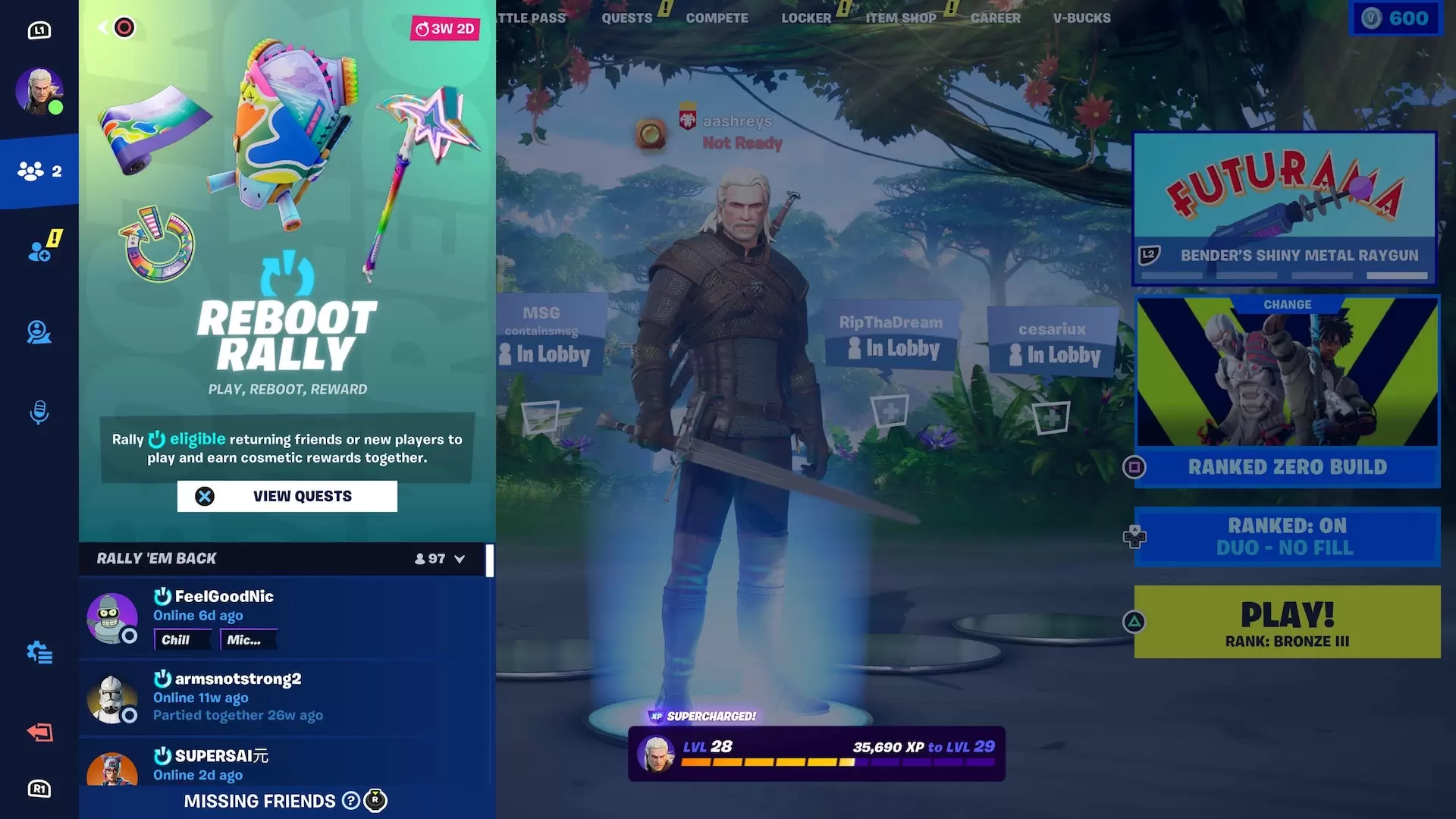
Reboot Rally promoted in the social panel
Adding social tags to be displayed in profile
Adding social tags to be displayed in profile
Paved in good intentions, they say.
Once we’d completed these needed updates and program investments on Fortnite, my attention shifted to the bigger picture of CEO Tim Sweeney’s vision for an interconnected social SDK with a customizable social panel for all to use.
While we were aware Discord was working on a similar offering, our goal was to add social to an already growing stack of free games services, including anti-cheat, payments, achievements, matchmaking, and analytics.
In an effort to align Fortnite and Online Services leadership, I produced a short storytelling video defining the experience target.
While the concept was well received, once Fortnite dev leadership understood that this vision would include agreeing to be the tentpole client of this entirely web tech service that would remove many of the features we’d just built, they very understandably became far too busy to entertain such a vision.
It would take more than a year for the value (and mandate) to present itself more clearly.
More than a year later...
In 2020, Epic sued Apple and Google for unfair business practices relating to monopolies over their respective app marketplaces and the significant 30% fee they charged for the privilege of using their compulsory payments service. This meant that Epic’s developer license was revoked for both ecosystems. This was very limiting to our ability to build a meaningful social service.
In December of 2023, Epic started winning court cases around the world. And we started working on social and mobile again.
The internal conversation became much more fruitful. We had also just shipped an adaptive UI model in Fortnite, allowing for readily customizable styling and taught us a lot about building flexible systems in Unreal Engine. Tim reconsidered his stance on a single-deployment web service of social services, and we aligned that there would be an Unreal version and a web-based version maintained. While the design for this social overlay would feel less traditionally Fortnite-branded, it would exist within the same UI paradigm and feel more like a supportive service layer.
First, with my team responsible for the Epic Games Store, we launched a mobile storefront (albeit through court-ordered allowance of high-friction side-loading). We wanted to start building a mobile presence as quickly as possible and onboard mobile devs—small teams that would be readily inclined to use our game services SDK.
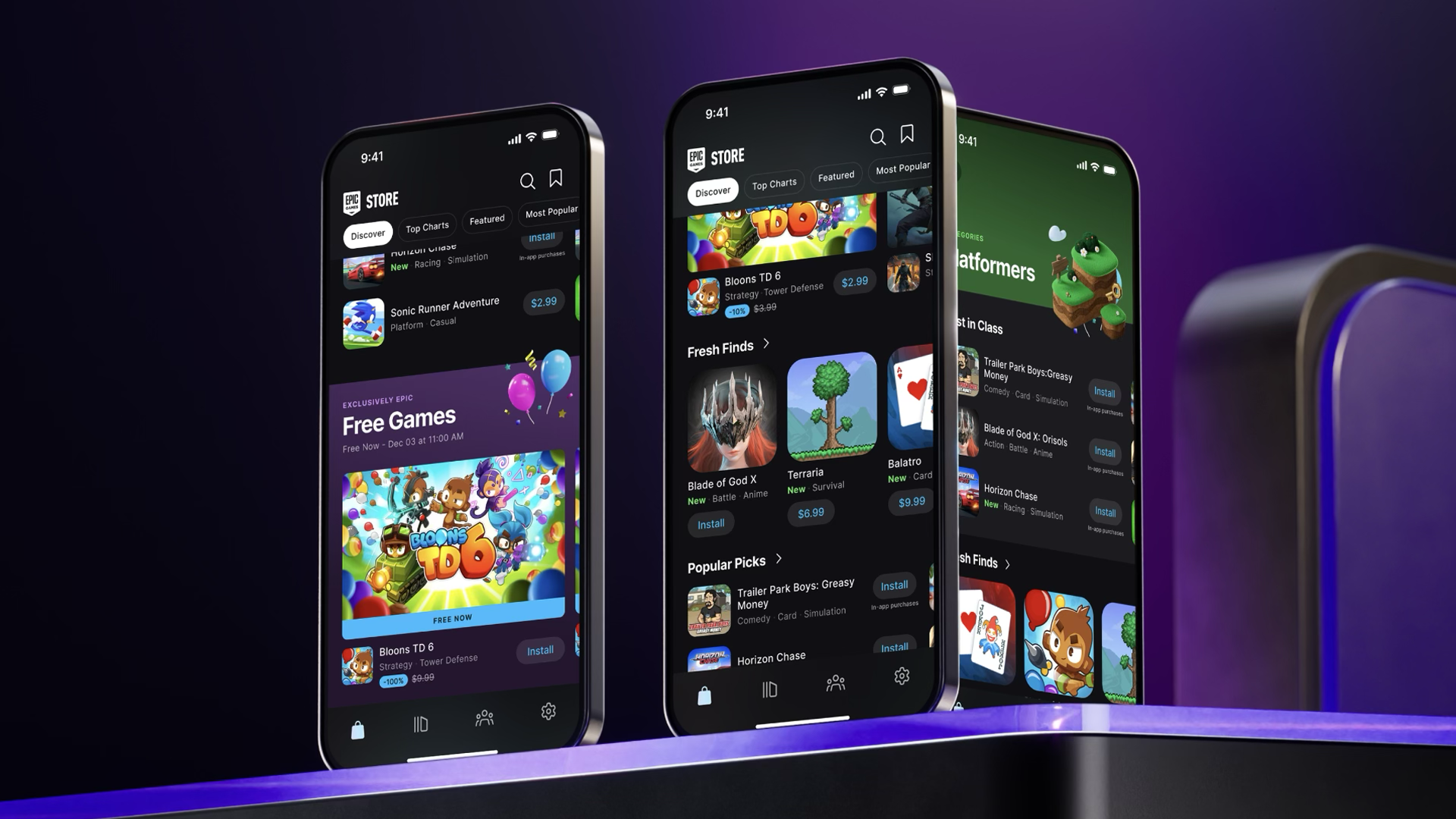
Social, wherever you are.
We then quickly jumped into production of re-envisioned social through the lens of what had worked successfully—and what was required to not be an experience erosion—for Fortnite, but mobile first. While the feature set was effectively table stakes, there was a shared path forward on which to build.
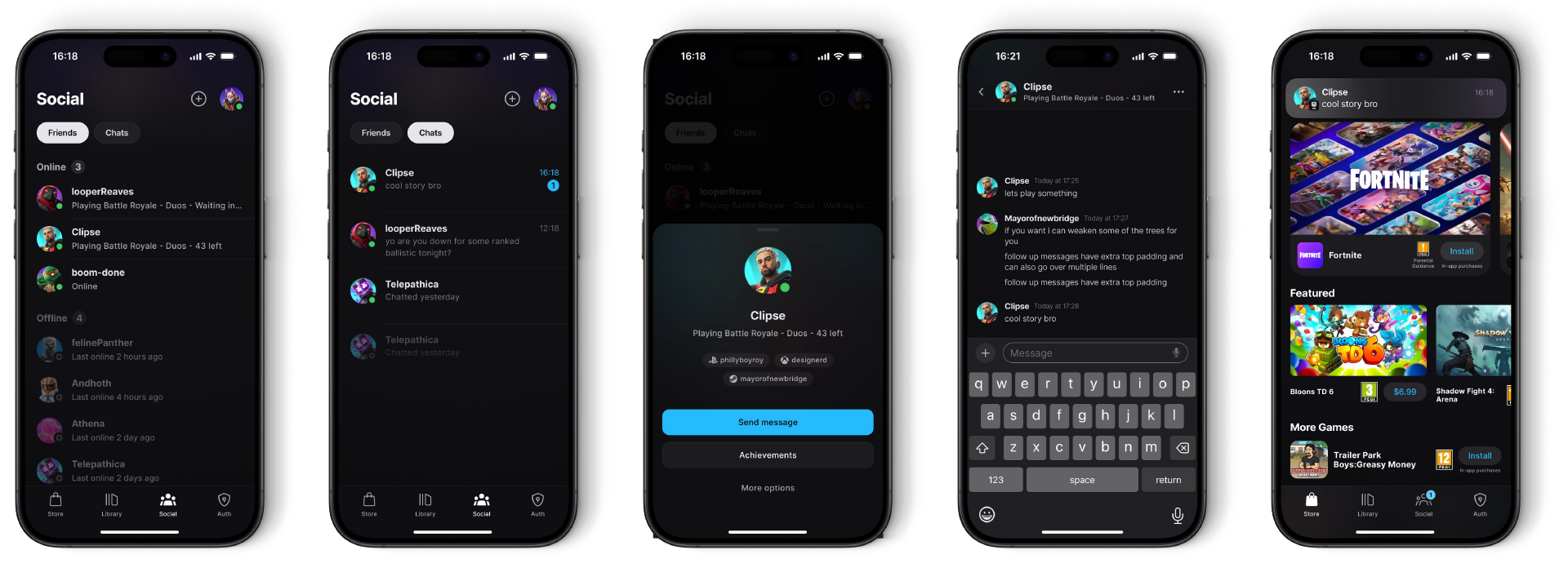
Simple, clean, and ready to play.
The primary critical-path feature to making the mobile experience successful was to enable players to join parties from their phone to talk, text, and (now that Fortnite is officially back on the official app stores) jump into a game.
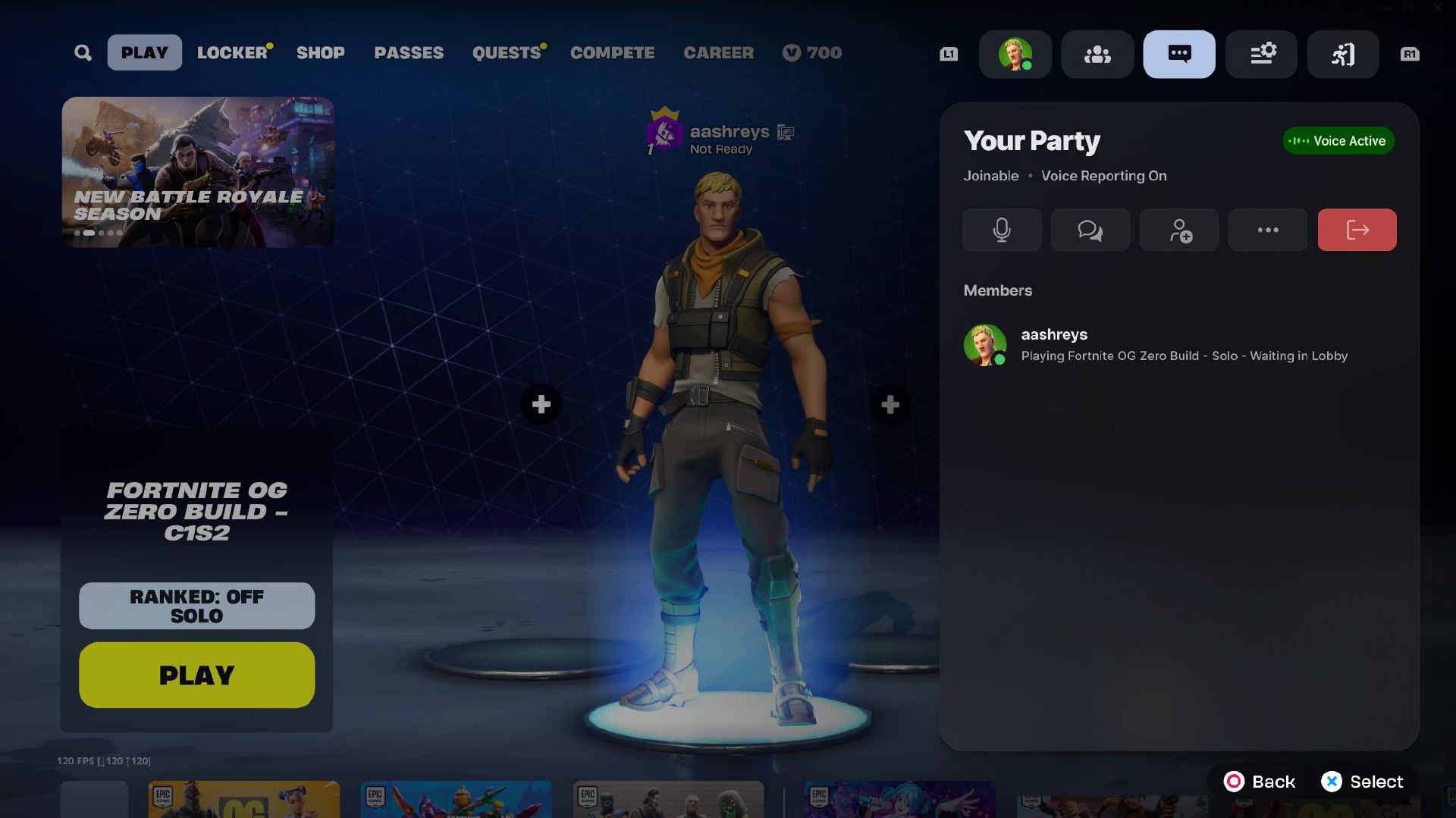
It’s not blue, but a glass effect respects the game experience
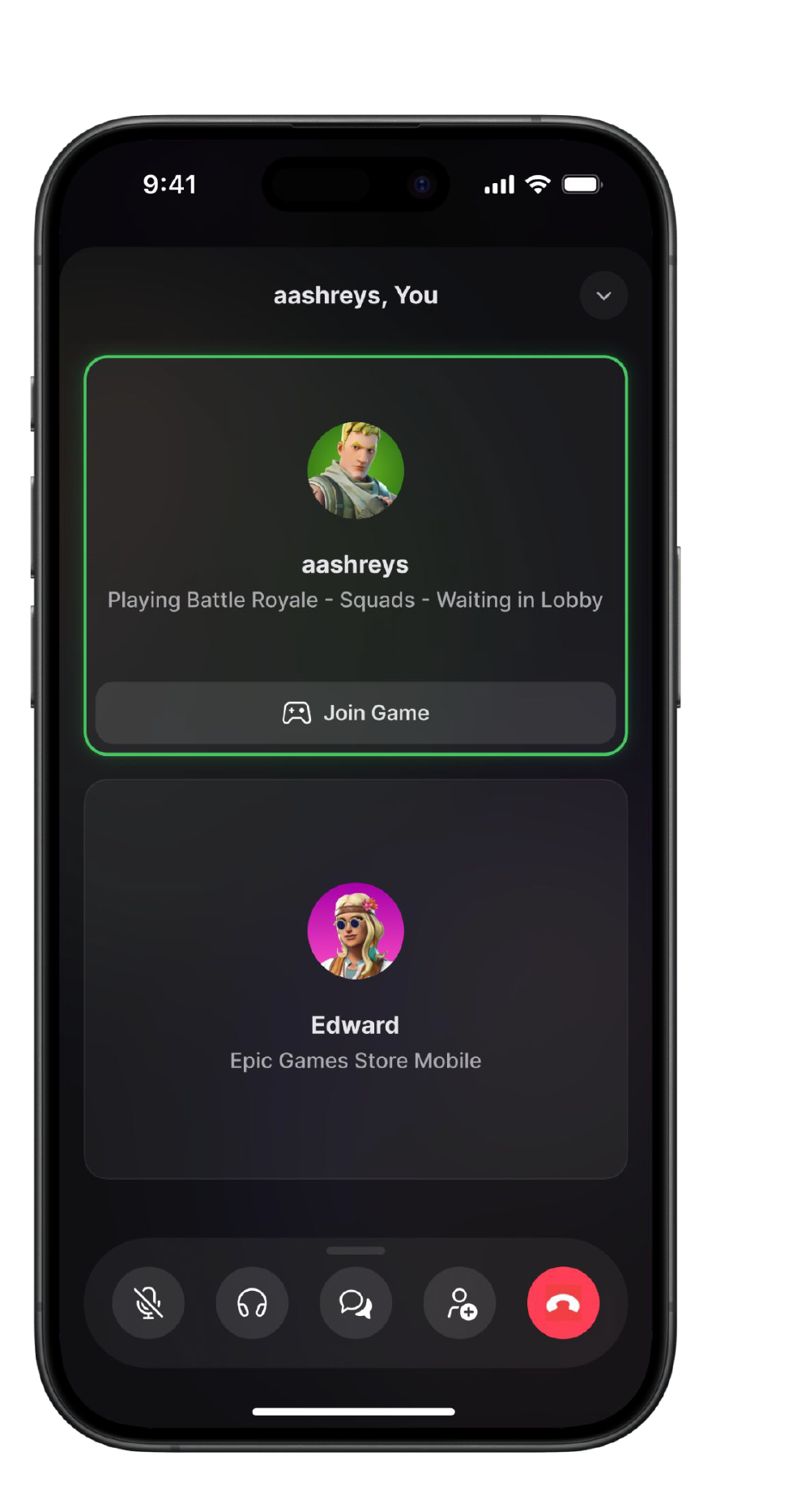
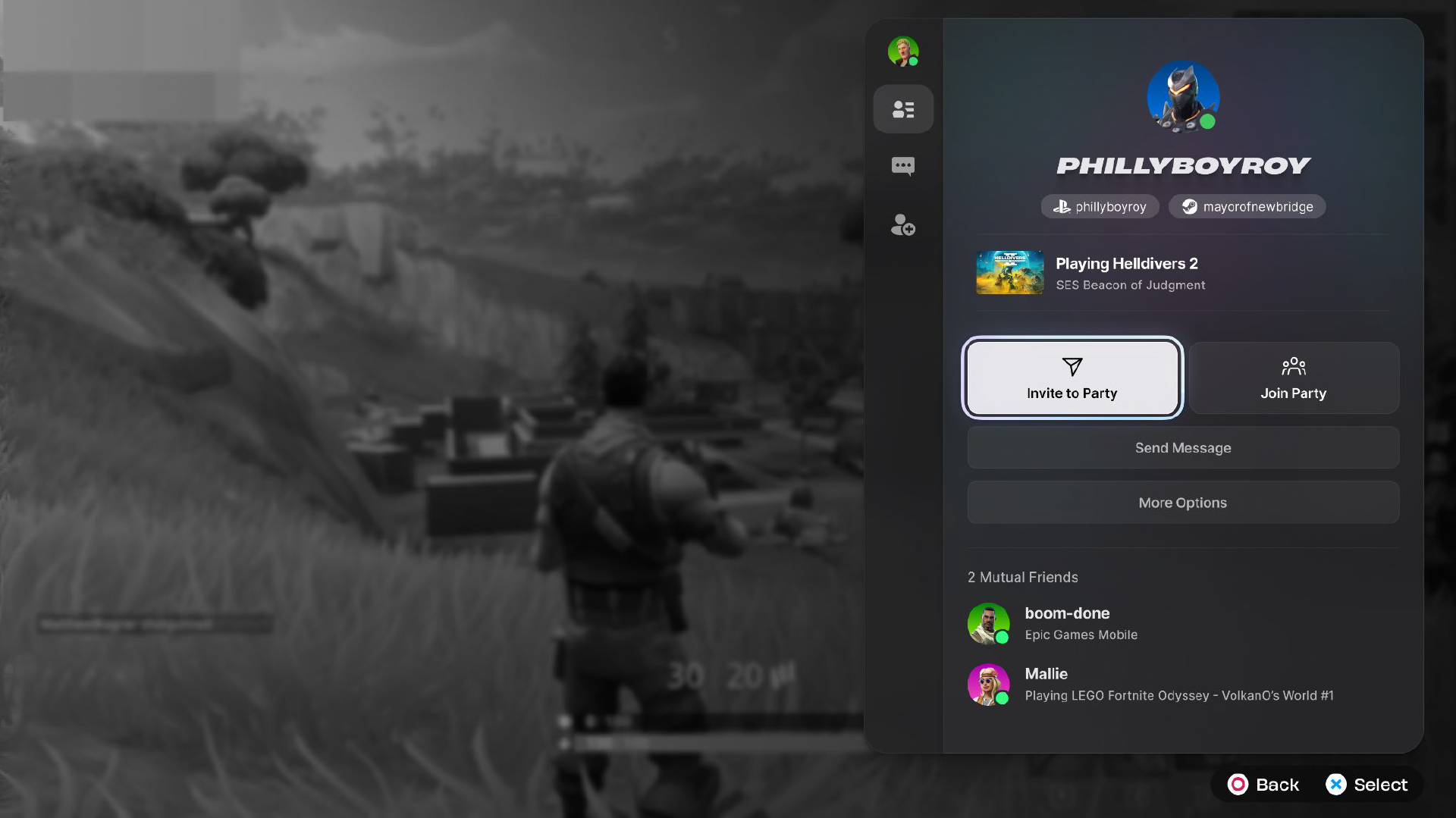
This service is then extended to any developer that wants to integrate the Social SDK, immediately benefitting from cross-platform parties as well as rich presence regardless of device or game. If I’m playing Helldivers 2 on PC and see that my friend is playing Rocket League on Playstation, I can switch voice channels from my local squad channel to have a conversation with her, and send her an invite to join my game party that will be waiting for her when she launches it.
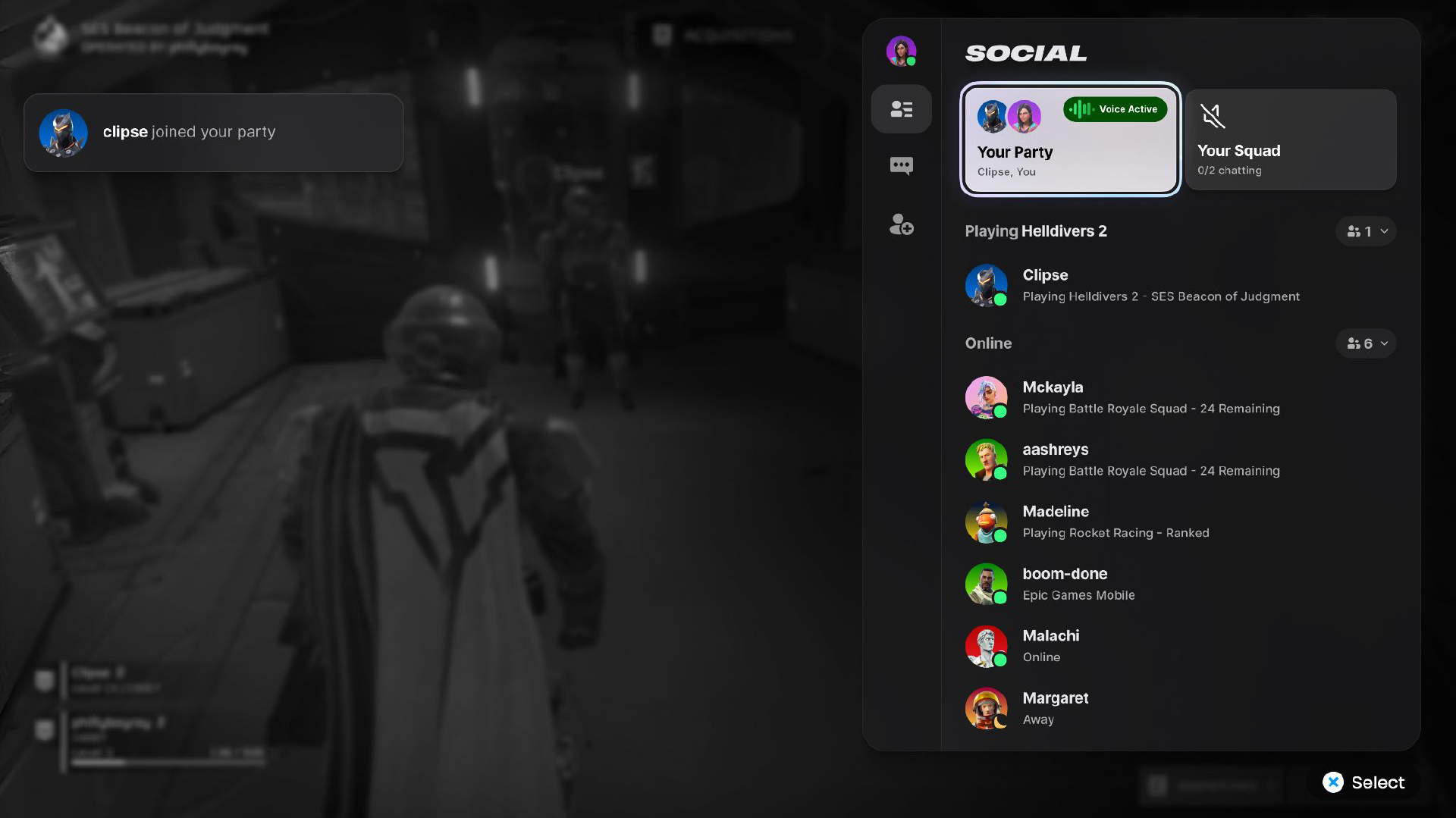
Perhaps most aligned with Epic’s vision for social is that smaller game devs have immediate access to Fortnite’s nearly 700 million account social graph, allowing them to reach audiences and grow their businesses in ways never before possible.
Case Studies
Epic Games
2020-2025
Social Systems
Creator Portal
Shop & Subscriptions
Electronic Arts
2014-2020
Cross-Platform Play
The Archives
2006-2014
Code School: Course Creation
LACMTA: Trip Planner